Mullet Taper Fade: The Modern Barber Guide
The 80s classic has officially returned, but it looks entirely different this time around. The mullet taper fade takes the aggressive “business in the front, party in the back” concept and refines it with modern barbering mechanics. By keeping the sides tightly faded and adding heavy texture to the top, this haircut transitions from a dated retro style into a sharp, highly requested modern aesthetic. Whether you want a subtle flow or a drastic disconnect, this guide explains exactly how to pull off a clean mullet taper fade.
What is a Mullet Taper Fade?
A mullet taper fade is a hybrid haircut that features short, textured hair on top, heavily faded temples, and significantly longer hair resting on the back of the neck.
Unlike a traditional fade that wraps all the way around the head, this style specifically protects the back section. The barber only fades the sideburn area, completely removing the hair above the ear. Consequently, this creates a dramatic visual disconnect between the tight sides and the flowing back. It offers a much cleaner, more structured look than the messy mullets of previous decades.
Best Mullet Taper Fade Variations
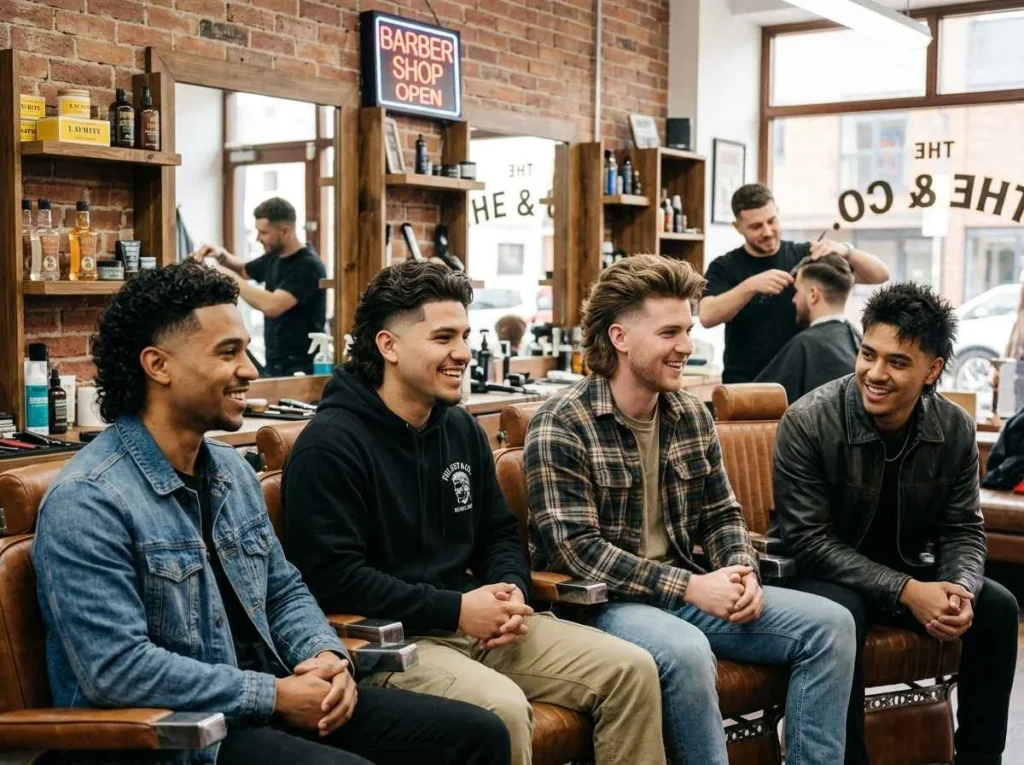
There is no single way to cut a mullet taper fade. You must customize the length and texture to match your personal style.
- Taper Modern Mullet Fade: This is the standard approach. The hair on top is cropped short and heavily textured. The back is left about two to three inches long, resting just above the shirt collar.
- Straight Hair Taper Mullet Fade: Straight hair requires heavy layering. Barbers use professional shear techniques to chop the back section so it falls naturally without looking like a solid block of hair.
- Taper Short Mullet Fade: If you work in a professional environment, this is your best option. The back is only left slightly longer than the top, creating the illusion of a mullet without violating strict corporate dress codes.
Low vs. Mid Mullet Taper Fade
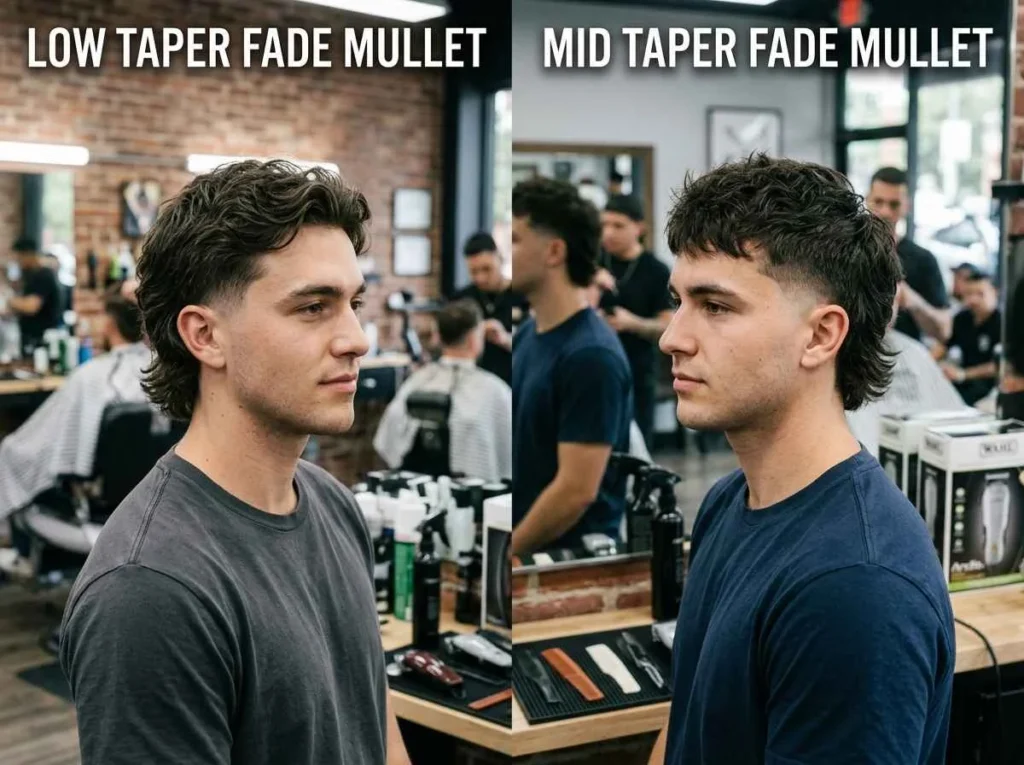
Just like any standard fade, you have to tell the barber how high to push the clippers on the sides of your head.
A low taper fade mullet keeps the faded section extremely tight against the sideburn. Because it leaves more hair on the sides of the head, the transition into the longer back section looks smooth and natural.
On the other hand, the mid taper fade mullet pushes the skin fade high up into the temple. As a result, the side of the head looks almost entirely bald. This creates a highly aggressive, edgy contrast that makes the hair on the back of the neck stand out even more.
What to Tell Your Barber
Communication is critical for this haircut. If you do not give specific instructions, you might end up with an outdated 1980s look.
- Specify the top length: Tell the barber you want heavy texture and point-cutting on top. It should be messy, not slicked back.
- Define the side fade: Clearly state that you want a taper fade on the temples only. Do not let them fade behind the ear.
- Address the neckline: Confirm how long you want the back to be. Show exactly where you want the hair to stop (e.g., top of the collar, middle of the neck).
- Mention the blend: Tell them if you want the sides blended smoothly into the back, or if you prefer a sharp, disconnected line above the ear. (If you prefer high volume on top, you might want to ask about a blowout taper fade instead).
Frequently Asked Questions
How long does it take to grow a taper mullet fade?
If you are starting from a standard short haircut, it takes roughly three to four months to grow the back section long enough to qualify as a true mullet. Hair grows about half an inch per month.
Does a mullet taper look good with a beard?
Yes, it pairs perfectly with facial hair. By fading the sideburn down to the skin, you create a sharp visual disconnect between the top hair and the beard, which looks highly intentional and groomed.
What product should I use to style a modern mullet?
Avoid heavy pomades or gels. Instead, use a lightweight sea salt spray or texturizing powder. These products enhance the natural flow of the hair without making the back section look greasy or weighed down.