Taper Fade: The Complete Guide to Low, Mid, and High Styles
You want a fresh haircut, but barbershop terminology often gets confusing. A taper fade is an option when you want cleaner edges while retaining length above. It removes bulk at the temples and the neckline while leaving the hair behind the ear completely untouched. Because it keeps a natural arch around the ear, it provides a cleaner, sharper look without forcing you to commit to a skin-tight fade on the sides. Whether you have thick curls or fine, straight hair, this guide breaks down your core options. Read on to learn the exact difference between a taper and a fade, how to match a style to your face shape, and the exact checklist to give your barber.
What is a Taper Fade?
A taper fade gradually shortens hair around the sideburns and neckline while retaining more length above. The shortest section can finish at skin or retain some hair; agree on the result with your barber.
Unlike other haircuts, the hair directly behind your ear remains longer. As a result, this creates a distinct, dark arch. Barbers often line this arch up sharply with trimmers to form a crisp “C-cup” at the temples. You maintain more volume and structure around the sides of your head. Barbers typically use clippers with guards ranging from a #2 down to a foil shaver to create a seamless blend. In short, it provides the perfect middle ground if you want a clean neckline but prefer keeping some weight on the sides.
Taper vs. Fade: What is the Real Difference?
Many people use these two terms interchangeably. However, they mean very different things in a barber chair.
A traditional fade blends the hair all the way around the sides and back of the head. In other words, the shortest length wraps horizontally from ear to ear without interruption. By contrast, a taper only fades the sideburns and the back of the neck, explicitly avoiding the area above the ear. Barbers may use these names differently. Agree on the areas to shorten and whether the shortest section should reach skin.
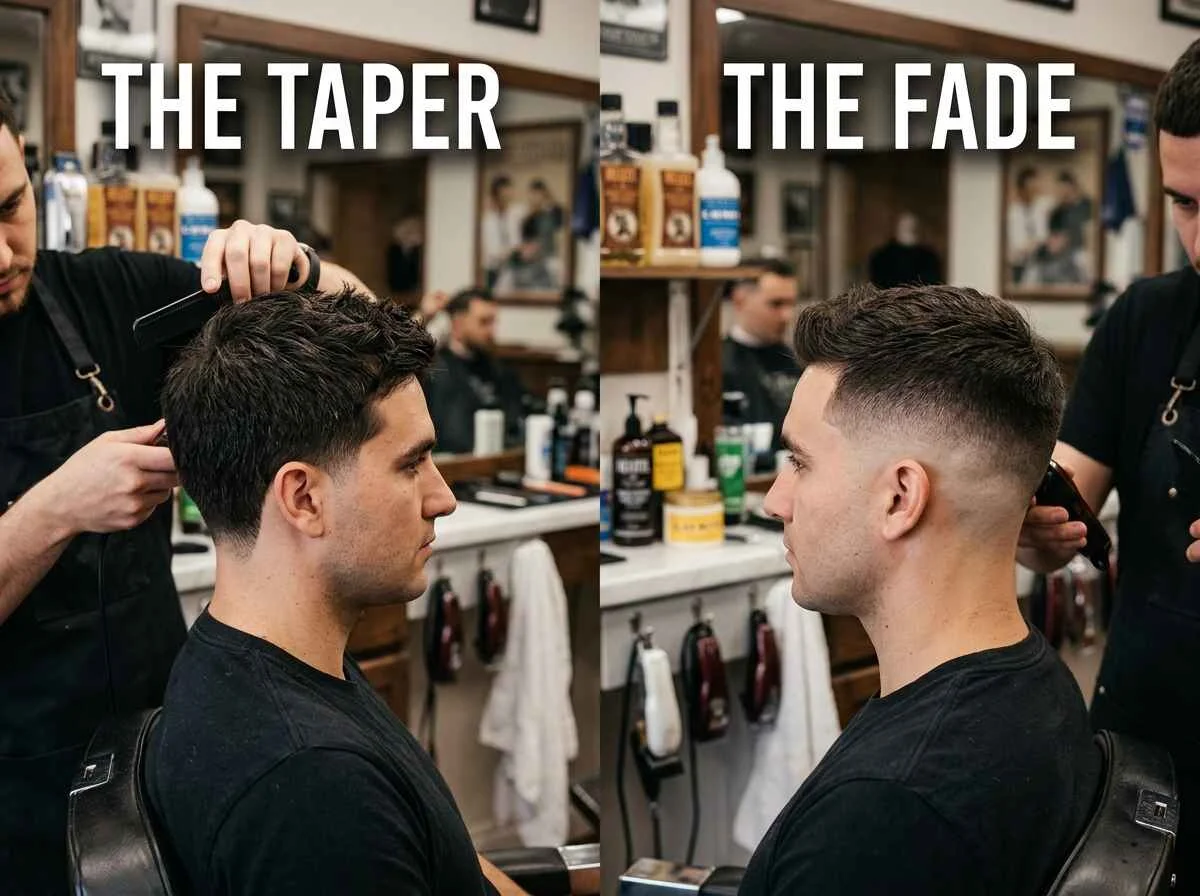
| Feature | Taper | Regular Fade |
| Faded Areas | Temples and neckline only | Entire sides and back |
| Hair Behind Ear | Remains longer (creates an arch) | Faded down to the skin |
| Overall Look | Conservative, keeps side weight | Aggressive, removes side weight |
| Best For | Maintaining volume, professional settings | High contrast, tight military styles |
The 3 Core Taper Fade Styles
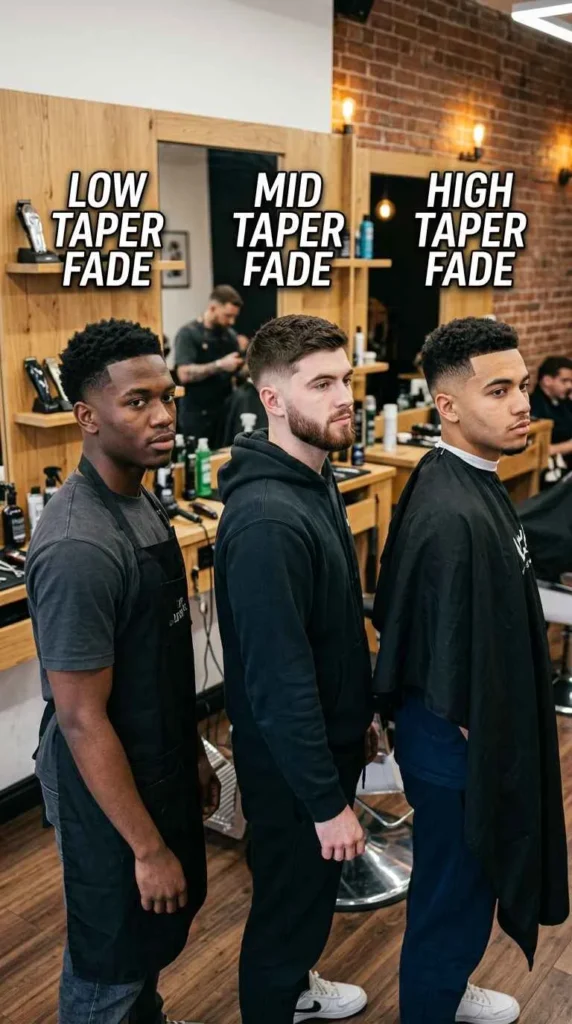
To get the exact look you want, you must decide how high you want the blend to travel up your head.
Low Taper Fade
The low taper fade is the most popular and conservative option. The blend starts right at the bottom of the sideburns and the very edge of the neckline. It barely creeps up the head, leaving a heavy weight line just above the ear. Consequently, it works perfectly for men who want a natural look or need to keep their hairstyle strictly professional for work. A low taper pairs exceptionally well with a heavy textured fringe or a messy crop.
Mid Taper Fade
If you want more contrast without going extreme, ask for a mid taper fade. The blending process starts slightly higher, usually sitting right at the middle of the temple and climbing to the occipital bone at the back of the head. Because it removes more bulk than the low version, it creates a sharper, more defined appearance. Furthermore, it complements almost any hair texture perfectly, from thick waves to fine, straight strands.
High Taper Fade
The high taper fade creates the most dramatic contrast. The barber pushes the fade up near the top of the temples and high on the back of the head. As a result, the transition from skin to hair happens very quickly. This style draws immediate visual attention to the hair on top. Therefore, it serves as the ideal base for voluminous styles like a pompadour or for thick, curly hair that requires tight sides for shape control.
How to Choose Based on Your Face Shape
Face proportions can help you decide where to keep height or width, but they do not prescribe one correct taper. Choose the silhouette you like alongside your texture and routine.
- Round Faces: If you want a narrower-looking silhouette, discuss controlled side volume and some top height. A high taper is one option, rather than a requirement.
- Long or Oval Faces: For a longer face, retaining some side fullness and limiting excessive top height may help if visual balance is your goal. Oval faces can suit several taper heights; texture and the finished shape still matter.
- Square Faces: A mid taper with softer texture is one option if you want less angular framing. You can also keep a sharper outline if that is the look you prefer.
Matching the Cut to Your Hair Type
The way a taper sits depends heavily on your natural hair texture and the styling products you use.
- Curly / Wavy Hair: A low or mid taper cleans up the edges while allowing the natural curls to drop heavily over the fade. Choose a styling product around your curl pattern, condition and desired finish; start with a small amount.
- Straight Hair: Straight hair often sticks out horizontally on the sides as it grows. Because of this, a mid or high taper helps remove that troublesome side bulk entirely. Finish with a matte clay for texture.
- Textured Top / Fringe: If you push your hair forward into a fringe, keep the taper low. This ensures you maintain enough weight on the sides to physically support the forward-flowing style.
The Barber Chair Checklist
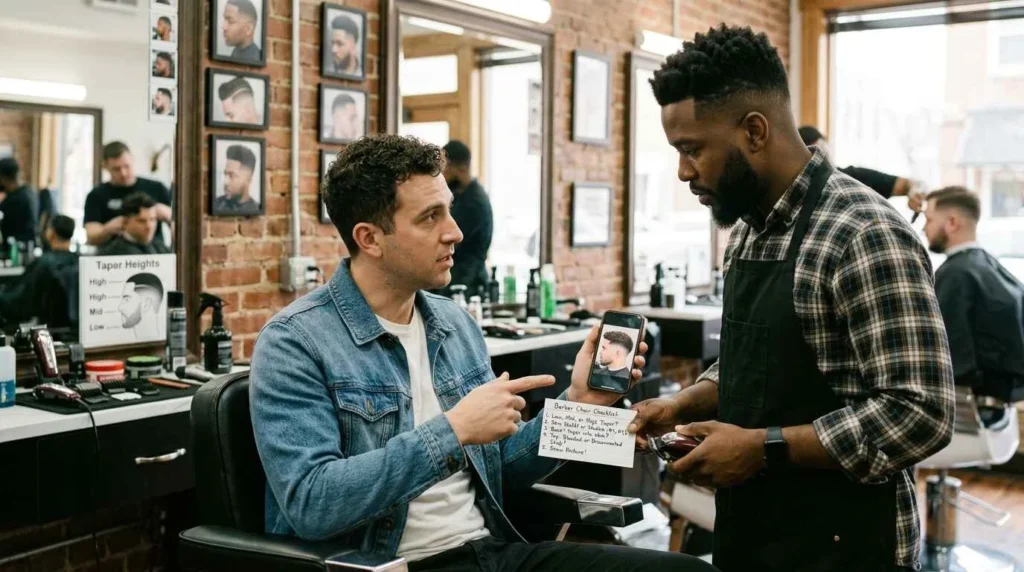
Never just sit in the chair and say “give me a taper.” Use this checklist to explain your preferences clearly and confirm the plan before cutting.
- Specify the height: Explicitly state if you want a low, mid, or high taper.
- Define the shortest length: Tell the barber if you want it taken all the way down to the skin (a bald taper) or if you want some stubble left (like a #1 or #2 guard).
- Address the back: Confirm the neckline shape and whether the taper should finish at skin or retain some hair.
- Discuss the weight line: Tell them whether you want the top hair heavily blended into the taper, or if you prefer a disconnected drop over the sides.
- Show a photo: Bring a reference picture that specifically matches your natural hair type.
The Regrowth and Maintenance Timeline
Fades grow out quickly. If you want to keep the style looking intentional, you need to understand the lifecycle of the cut.
- Days 1 to 7: The freshly cut outline may look crisp; its appearance depends on the shortest length and edge work you chose.
- Days 8 to 14: A skin-finished section may show more visible regrowth, while a longer finish can change more subtly.
- Days 15 to 30: The contrast may soften as the short sections grow. How quickly the outline changes depends on your growth, starting length and texture.
Treat these day ranges as examples, not a fixed schedule. Book a touch-up when the contrast or outline stops matching the finish you want.
Trending Variations to Consider
While the classic styles above are foundational, several modern variations push the boundaries of the traditional cut. We have dedicated guides for these specific styles:
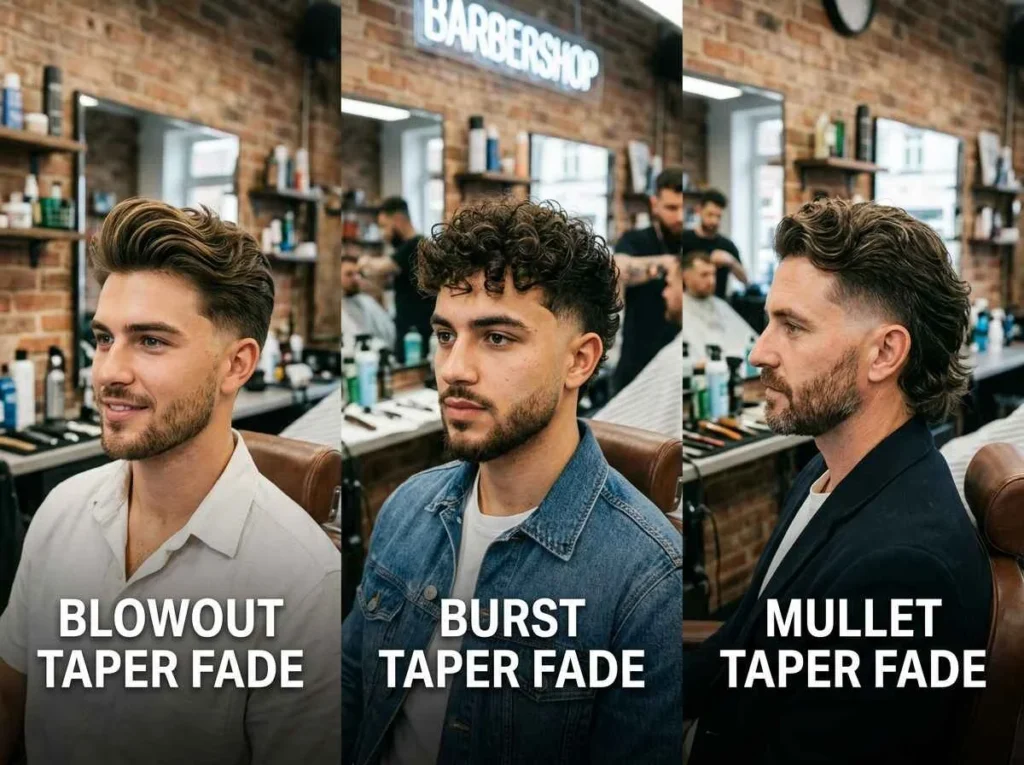
- Blowout Taper Fade: This style leaves significant length around the sides. You brush it backward to look wind-blown, while the edges remain tightly faded.
- Burst Taper Fade: The fade curves specifically around the ear in a semi-circle, leaving the neckline completely long.
- Mullet Taper Fade: By fading only the temples and leaving the back entirely uncut, barbers create a modern, edgy take on the 80s classic.
-

African Hair Braiding: Styles, Culture and Hairline Care
African hair braiding includes many styling traditions and contemporary techniques associated with African communities and the Black diaspora. Cornrows sit close to the scalp,…
-
Highlights on Brown Hair: Choose Your Shade and Placement
Highlights on brown hair lighten selected sections while leaving some of the darker base visible. The result can be subtle brunette dimension, warm caramel…
-
Types of Curly Hair: Find Your Pattern and Choose Your Cut
The common types of curly hair fall into three families: Type 2 waves, Type 3 curls and Type 4 coils. Each family has A,…
-
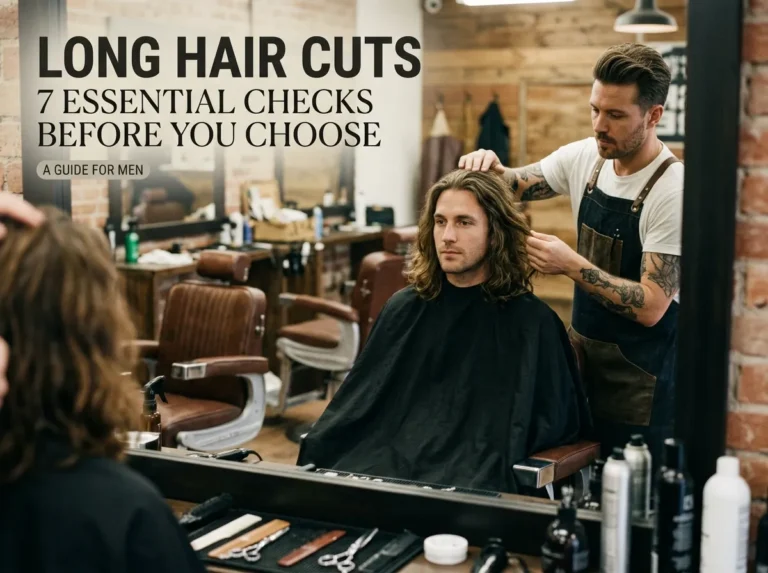
long hair cuts: 7 Essential Checks Before You Choose
The best long hair cuts match where you want volume, how your hair falls naturally, and how much care you will actually do. Round…
-
Early Lice in Hair: Signs, Causes, and What to Do
Early lice in hair can be present before itching starts. Look for tiny crawling insects and eggs firmly attached near the scalp, especially behind…
-
Middle Part Hairstyle for Men: Is It Right for You?
A middle part hairstyle is worth trying if you want face-framing hair with movement and you’re willing to keep enough length in the front.…
-
What Hairstyle Suits Me? 5 Smart Checks for Men
The hairstyle that suits you combines a shape you like with your natural hair and a routine you can maintain. If you’re asking “what…
-
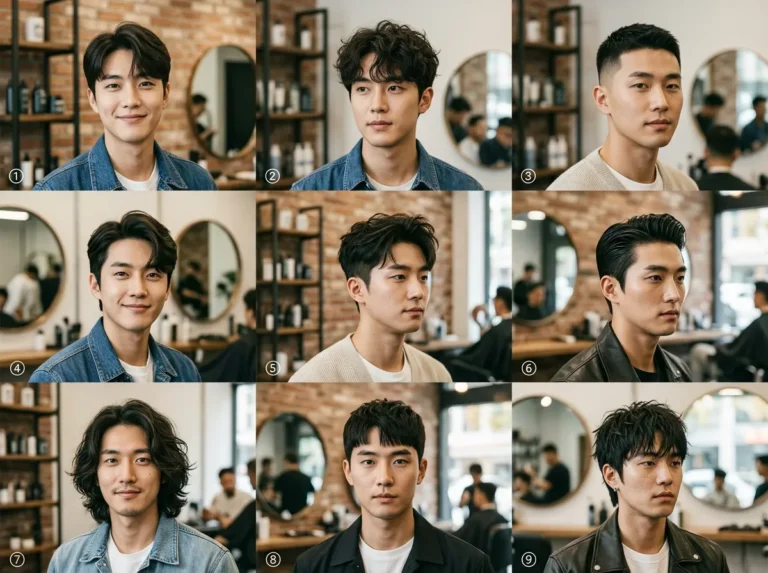
10 Korean Hairstyles for Men: Find Your Best Fit
If you’re searching for a “korean men hairstyle,” start with your natural texture and the amount of styling you’ll actually do. A two-block haircut…
-
What Is the Darkservices HWID Spoofer and How Does It Work?
Hardware bans can instantly lock you out of your favorite gaming platforms, rendering your entire computer useless for online play. This sudden restriction feels…



Frequently Asked Questions
Does a taper fade look good on a receding hairline?
A low taper can retain side fullness, but the result depends on your hairline, density and top styling. Ask your barber to assess the dry shape; a haircut changes presentation and does not treat hair loss.
How much does a taper fade cost?
Ask your chosen shop for its current price. Location, stylist, service and any beard work affect the quote; a taper does not have one universal price or always cost the same as a full fade.
Can you get a taper fade with a beard?
Yes, and it looks excellent. The barber will fade the bottom of the sideburn down to the skin, then immediately fade it back into the top of your beard. Consequently, this creates a clean visual disconnect between your head hair and facial hair.
Is a taper fade professional?
Yes, a low or mid taper is highly professional. It provides clean edges while keeping enough hair on the sides to look traditional in a corporate environment. It looks much more conservative than a high military fade.
Can I give myself a taper fade at home?
Barbers strongly advise against doing this yourself. The signature “C-cup” arch behind the ear requires extreme precision. Because you have to do the back of your neck using a mirror, the inverted reflection usually leads to uneven guidelines and chopped hairlines.
Next Steps
A taper fade offers the perfect balance of a clean finish without losing the natural structure of your hair. To get started, save a photo of a low, mid, or high style that matches your face shape and bring it directly to your next barber appointment.