African Hair Braiding: Styles, Culture and Hairline Care
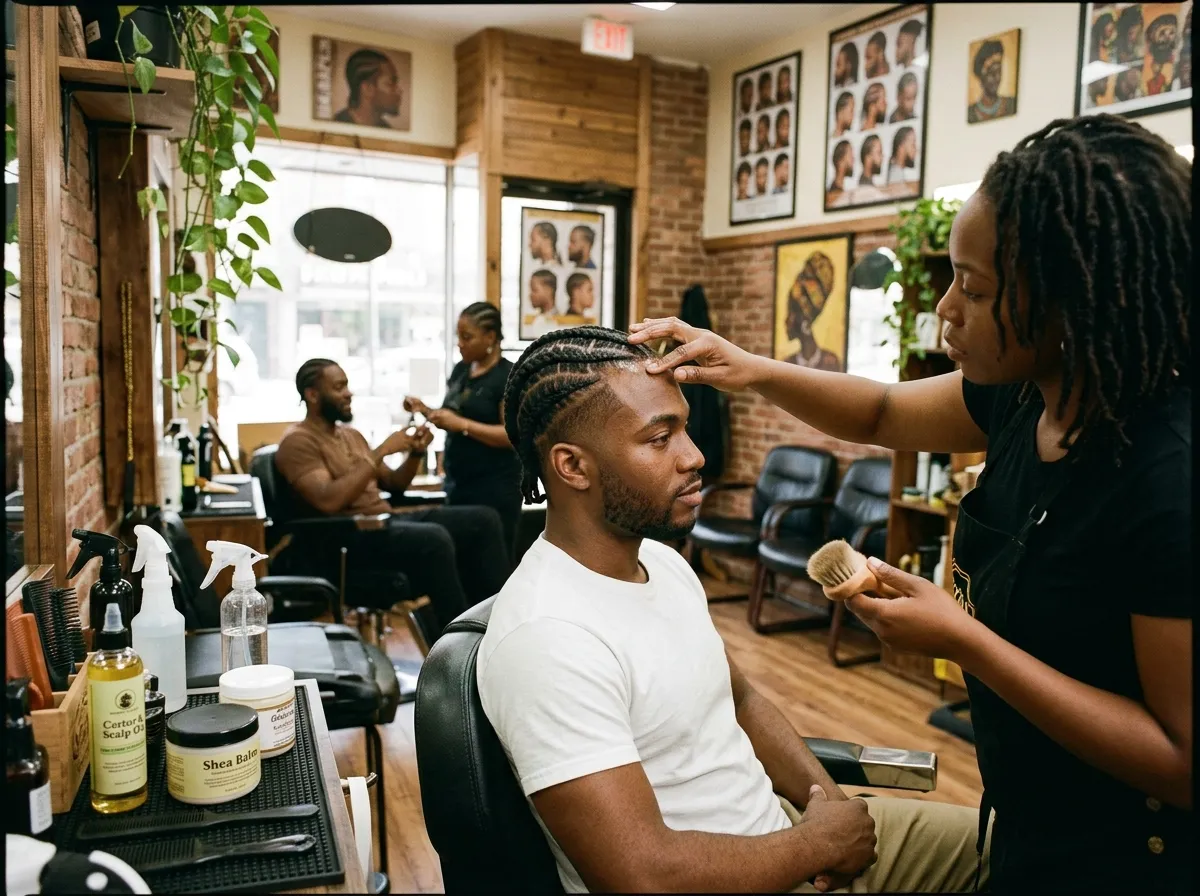
African hair braiding includes many styling traditions and contemporary techniques associated with African communities and the Black diaspora. Cornrows sit close to the scalp, while individual styles such as box braids hang from separate sections. Extensions are optional for some looks.
Choosing a style involves more than selecting a photograph. Your hair’s condition, the weight of added hair, installation tension and daily routine affect whether the result is comfortable and manageable.
A braid should not need to hurt to look neat.
What is African hair braiding?
African hair braiding is a broad description, not one hairstyle with one origin. Different communities have developed distinct patterns, techniques and meanings.
Braiding generally involves interlacing strands. Cornrows incorporate hair progressively along the scalp; individual braids begin from separate sections and hang freely.
Related salon services need their own names. Two-strand twists, locs and faux locs may appear on the same booking menu, but they are not technically identical to three-strand braids.
The distinction matters because installation, maintenance and removal differ.
Which African hair braiding styles are different?
Choose the structure first, then discuss size, length and decoration.
| Style or technique | How it works | Main consideration |
|---|---|---|
| Cornrows | Hair is braided close to the scalp in continuous rows | Direction and tension affect comfort |
| Box braids | Individual braids begin from clearly sectioned areas, commonly square-shaped | Added length and thickness affect weight |
| Knotless braids | Braiding starts with natural hair, with extension hair gradually introduced | Knotless construction does not guarantee low tension |
| Feed-in technique | Extension hair is added progressively | Used within different designs, rather than one fixed style |
| Fulani-inspired styles | Contemporary designs draw on Fulani traditions, often combining scalp braids, individual braids and adornment | Modern salon versions vary |
| Braided bob | Individual braids finish around bob length | Shorter length changes weight and silhouette |
| Crochet installation | Prepared hair is attached to a foundation, often cornrows | This describes attachment, not one braid pattern |
Salon names are not perfectly standardized. “Goddess braids,” for example, can describe different looks depending on the stylist. Send a reference photograph and ask what the service includes.
Are knotless braids always better than box braids?
No. Knotless braids avoid the same root attachment used in some traditional extension installations, but length, added hair and tightness still matter.
A heavy knotless installation can still pull on the scalp. A carefully installed, appropriately weighted alternative may be more comfortable.
When comparing African hair braiding options, assess the finished load on your natural hair—not just the service name.
How are braids installed?
A typical appointment follows four stages.
| Stage | What happens | What to discuss |
|---|---|---|
| Consultation | The braider assesses your goal and hair | Previous treatments, breakage and scalp symptoms |
| Preparation | Hair is cleaned, detangled and prepared | Whether washing or stretching is included |
| Sectioning and installation | Hair is divided and braided, with extensions if requested | Size, direction, tension and weight |
| Finishing | Ends and accessories are completed | Material-specific finishing and home care |
Extensions can add length, fullness or color. They are not necessary for every style.
There is no universal minimum length that guarantees an installation. Grip depends on hair length, texture, condition and the intended design. A consultation is more useful than choosing a tight installation because your hair is short.
Ask about the full service price, expected appointment length and removal options. Small sections and elaborate patterns can require more work, but the quote should come from the braider—not a generic online timetable.
Who wears African hair braiding and which option suits you?
These styles have strong cultural significance within African and Black diaspora communities. Men, women and children wear them for identity, aesthetics, convenience and special occasions.
Suitability is individual. Having a particular curl number or gender does not automatically decide which style you should wear.
| Your priority | Direction to discuss |
|---|---|
| Keep hair away from the face | Comfortable cornrows or another secured design |
| Avoid substantial added weight | Natural-hair braids or shorter, lighter extensions |
| Wear a braided top with shorter sides | Section placement coordinated with the haircut |
| Change the outline without very long braids | A shorter individual-braid style |
| Style a child’s hair | Loose, lightweight options with simple upkeep |
| Protect an already sensitive hairline | Assessment before adding tension |
Options for men
Cornrows, individual braids and braided tops with shorter sides provide different silhouettes.
If you combine braids with a low taper haircut, agree where the braided section ends before cutting. Repeated edge work should not gradually remove hair that belongs within the braid pattern.
Options for women and children
Length and decoration are choices, not requirements. Shorter braids can offer a different look while reducing the weight associated with extra length.
For children, comfort comes before intricate patterns. Heavy beads, extensions or tight ponytails can add pulling even when the initial braids seem manageable.
Adults and children should not be expected to tolerate pain for neatness.
Where do African braiding traditions come from?
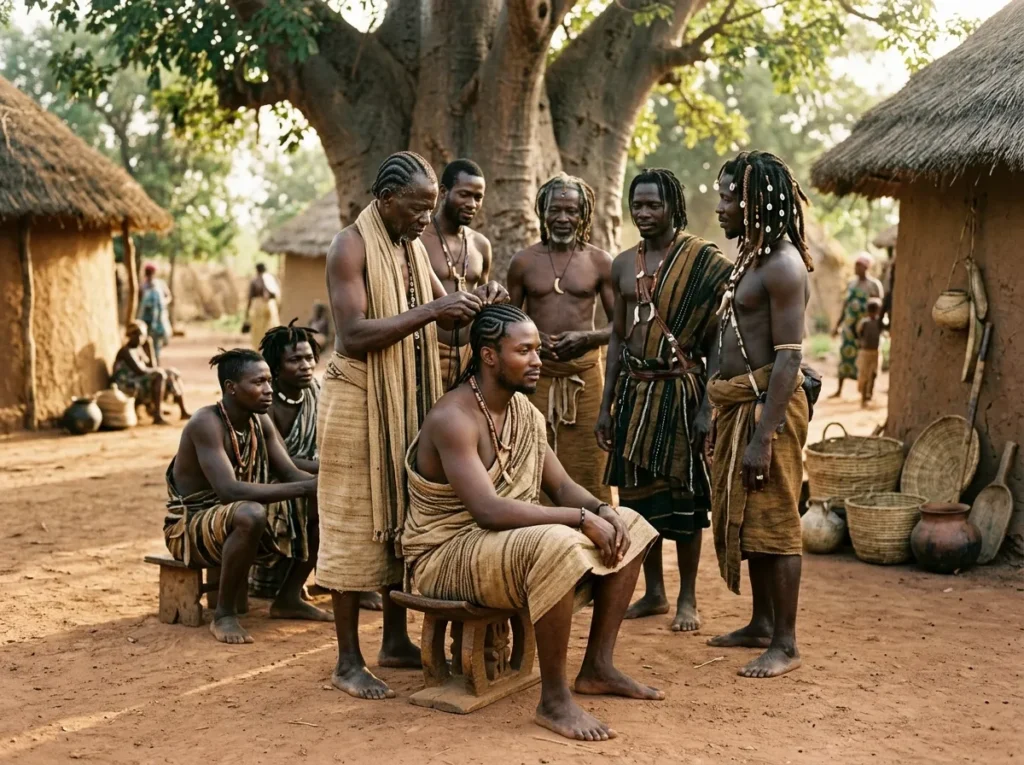
African hair braiding cannot be accurately assigned to one country or one moment in history. Africa contains many communities with distinct practices, and traditions continued to develop across the diaspora.
One documented example is the Fulani braid tradition. The Smithsonian’s 2023 account of Black identity through hair connects it with the Fula, Fulani or Fulɓe people of the Sahel region.
That makes the Smithsonian’s discussion of Fulani braid traditions more useful than treating “Fulani” as a generic label for any decorated braid.
Modern national borders do not contain every cultural tradition neatly. A community’s practices can extend across several countries.
Which country likes braids most?
This review did not establish a reliable current country ranking.
Salon photographs, celebrity coverage and social-media posts show visibility. They do not measure population-wide preference.
Rather than declaring one country the “most popular,” the useful distinction is between a style’s cultural associations, its contemporary salon variations and its visibility abroad.
Claims that every braid began on one exact ancient date also need stronger evidence than repeated online summaries.
Which actors and films featured braided styles?
Film examples show how African hair braiding has appeared on screen. They do not establish who invented it.
| Example | Documented hairstyle connection | Practical inspiration |
|---|---|---|
| Janet Jackson in Poetic Justice (1993) | Her long individual braids became a recognizable part of the character’s appearance | Length, braid size and overall outline |
| Letitia Wright as Shuri in Black Panther (2018) | Hair-department head Camille Friend described choosing individual braids | How braids can support several arrangements |
In Camille Friend’s interview about Shuri’s hair, she explains the production’s hairstyle choices. That is direct context from the person responsible for the work.
Bring a screen reference to discuss the elements you like. Your version may need different length, weight or placement to suit your hair.
A film hairstyle is inspiration, not proof that the same installation is appropriate for everyone.
When can braids damage your hairline?
The main concern is traction alopecia, hair loss caused by repeated pulling. Risk comes from how a style is installed and worn, not simply whether it is described as protective.
The American Academy of Dermatology’s guidance on hairstyles that pull identifies warning signs including pain, stinging, crusting and sections of scalp being pulled upward.
| What you notice | What to do |
|---|---|
| Pain or persistent pulling during installation | Ask for the affected sections to be loosened or redone |
| A tight braided ponytail pulling at the front | Release the additional tension |
| Crusting, sores or persistent irritation | Stop stressing the area and seek medical advice |
| Broken hairs, thinning edges or patches of loss | Arrange a dermatologist’s assessment |
Do not cover pain with more product and wait for the style to “settle.” Repeated pulling can eventually cause permanent loss.
Knotless braids, moisturizers and expensive extension hair do not cancel out excessive tension.
This is general grooming information. Persistent scalp symptoms or hair loss need professional assessment.
How do you clean and maintain braids?
African hair braiding reduces some daily styling work, but it does not remove the need to clean your scalp.
Ask your braider how to wash and dry the specific installation. Adapt the routine to sweat, buildup, scalp condition and the materials used.
- Clean the scalp gently rather than aggressively scrubbing the braids.
- Rinse products thoroughly and allow the installation to dry properly.
- Avoid repeatedly pulling braids into tight updos.
- Use products to address an actual need rather than layering them over irritation.
- Check the hairline and exposed sections regularly.
Your natural texture also affects handling. Our guide to different curl patterns explains why curl shape alone does not describe strand thickness or condition.
How long should you keep them in?
AAD guidance advises wearing braids for no longer than six to eight weeks, alongside other measures to reduce pulling.
That is a limit, not a target everyone should reach. Pain, irritation, tangling or the condition of your hair may require earlier removal. A fresh-looking surface does not prove the roots are comfortable.
How should you remove braids?
Plan removal when booking African hair braiding, especially if you are adding substantial length.
Work section by section, unravel gently and detangle accumulated shed hair without yanking. If you are uncertain where your natural hair ends, do not cut the extension based on a guess.
A rushed takedown can undermine an otherwise careful installation. Ask whether professional removal is available and what it includes.
Before another tight style, assess the scalp and hairline. Existing breakage is a reason to change the plan rather than immediately repeat it.
What should you ask before booking?
Use a brief that describes comfort and upkeep as well as appearance:
“I want medium-sized individual braids with manageable length and limited added weight. Please assess my hairline, explain the preparation and tell me how to clean and remove them.”
Then confirm:
- Is the requested style appropriate for my current hair?
- Are extensions included, and what material will be used?
- Can the length or weight be reduced?
- What is included in the quote?
- What should I do if sections hurt afterward?
- How should removal be handled?
The best African hair braiding appointment starts with a suitable plan—not a promise that every reference picture can be copied exactly.
Questions before choosing braids
Does African hair braiding make hair grow faster?
Braiding does not guarantee faster growth. Reduced daily handling may help retain length, while excessive pulling can cause breakage or hair loss.
Can you braid without extensions?
Yes. Some designs use natural hair alone; suitability depends on the length, condition and intended style.
Are twists and locs types of braids?
They are related styling categories but use different structures. Ask which technique and installation the booking actually covers.
Should new braids hurt for several days?
Pain should not be treated as a necessary stage. Ask for tension to be corrected and seek assessment for persistent symptoms.
Choose the structure you like, then adjust length, weight and placement to your hair. Keep comfort part of the decision from consultation through removal.