Early Lice in Hair: Signs, Causes, and What to Do
Early lice in hair can be present before itching starts. Look for tiny crawling insects and eggs firmly attached near the scalp, especially behind the ears and at the back of the neck. Finding a live louse is the strongest sign of an active infestation. If you’re unsure, ask a pharmacist or clinician to help confirm it before choosing treatment.
Head lice come from contact with someone who has them. They aren’t proof of dirty hair or poor parenting.
This guide provides general information, not a diagnosis. Follow your product’s label and seek professional advice for young children, pregnancy, scalp infection, or unsuccessful treatment.
What do early lice in hair look like?
Head lice are small insects that feed on blood at the scalp. “Early lice” describes an infestation noticed early; it isn’t a separate type of louse.
An adult is roughly sesame-seed sized. A nymph is a smaller, young louse. Nits are eggs or their attached shells, which can remain after treatment.
| What you notice | What it may mean | Next step |
|---|---|---|
| A crawling insect in scalp hair | Possible active lice | Identify it with a detection comb or professional help |
| Tiny oval objects stuck to strands | Possible nits | Check their location and look for live lice |
| Loose flakes that move easily | Possible dandruff or debris | Don’t diagnose lice from flakes alone |
| Itching without visible lice | Several possible scalp causes | Inspect carefully rather than treating by guesswork |
No itching doesn’t rule lice out. CDC’s 2024 overview explains that itching can take four to six weeks to develop during a first infestation.
How are nits different from dandruff?
Nits cling to individual hairs; dandruff usually shifts more easily. However, hair products and other debris can also confuse a visual check.
Don’t decide whether an egg is alive from its color alone. The NHS’s undated guidance, reviewed in October 2026, emphasizes finding live lice to confirm the problem.
Why do people get head lice?
The main route is direct hair-to-hair contact. Lice crawl between people; they don’t fly or jump. Contact during play, close seating, or a sleepover can provide an opportunity.
Shared brushes or recently used head-contact items can occasionally contribute, but they aren’t the main route. Human head lice aren’t spread by pets.
According to CDC’s 2024 overview, infestation isn’t related to cleanliness. Washing more often doesn’t remove the need to identify and treat an active case.
Which ages and hair types are affected?
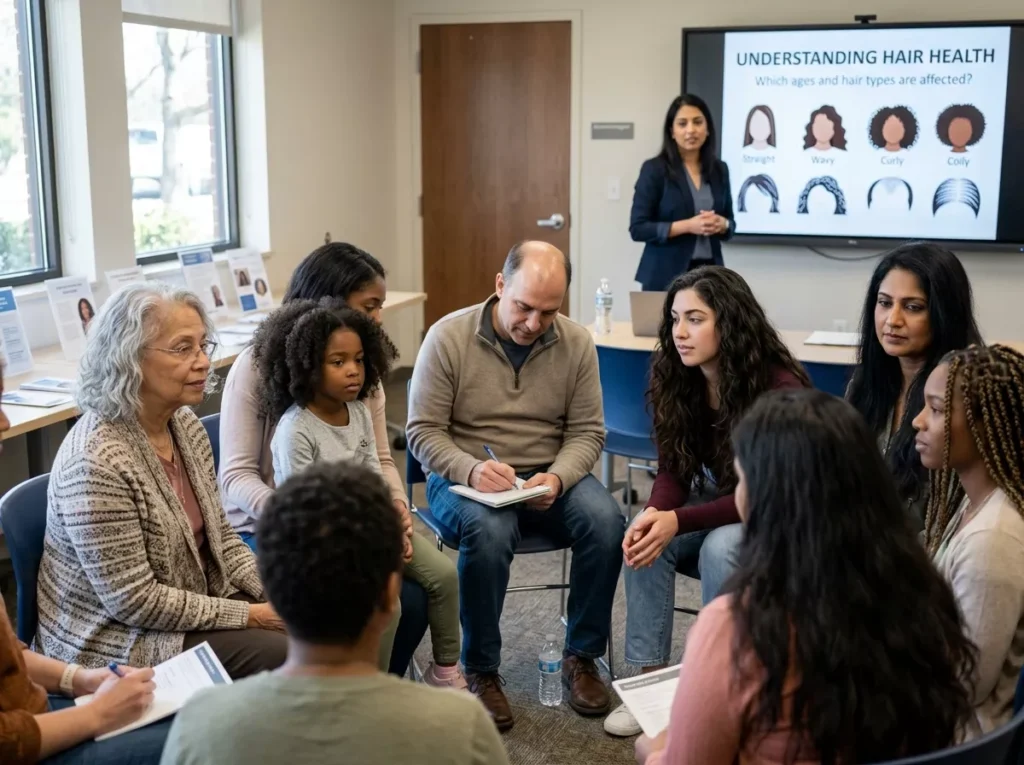
Preschool and elementary-school children are commonly affected in the US, including the three-to-eleven age group. Adults, household members, and caregivers can also catch lice.
No haircut or texture should be treated as complete protection. Straight, wavy, and curly hair can require different inspection techniques. Long or dense hair can take more time to section and comb, which is a practical issue rather than proof that it causes infestation.
Short hair isn’t a guarantee either. Focus on exposure and careful checking instead of assuming only children with long hair need inspection.
How do you check for an active infestation?
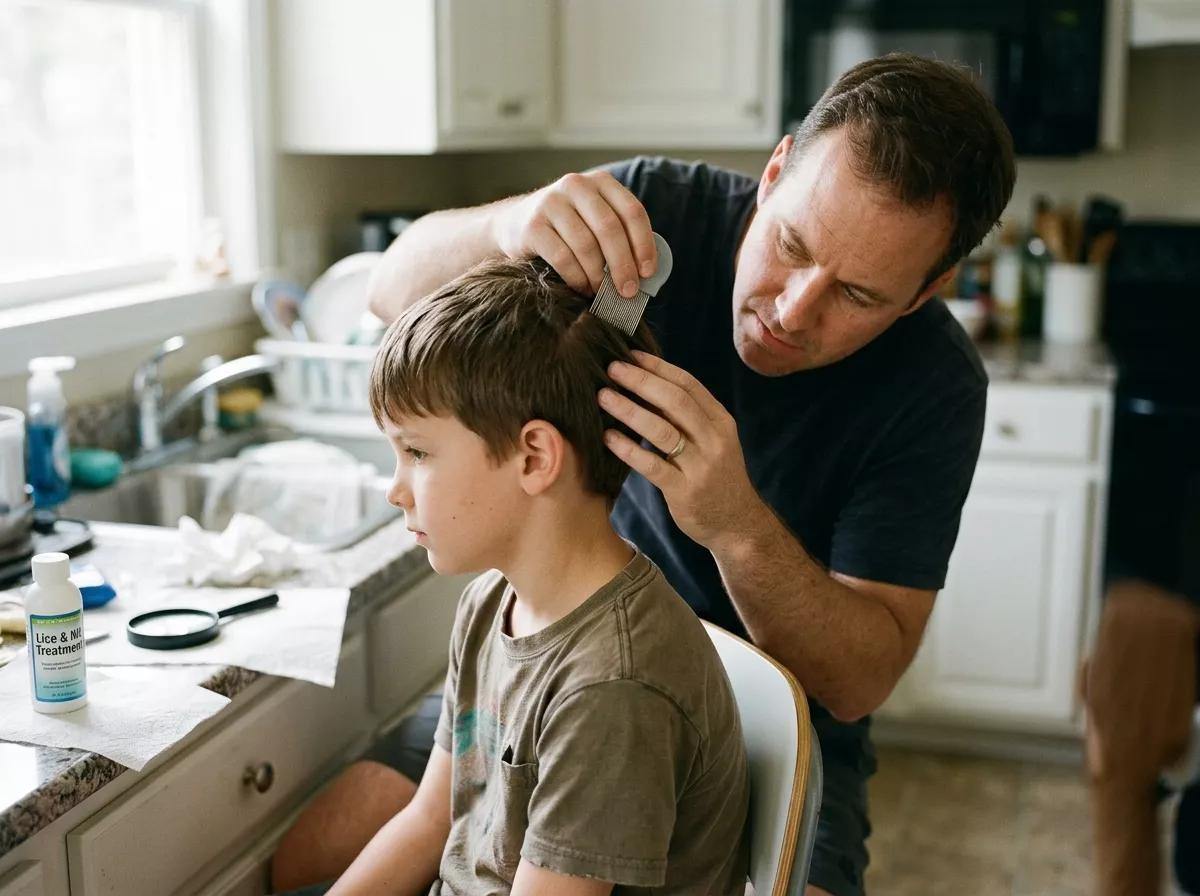
Use good light, a fine-toothed detection comb, and enough time to examine the whole head. A quick look at the top can miss insects elsewhere.
| Step | How to check |
|---|---|
| 1. Prepare | Sit under bright light and gently detangle the hair |
| 2. Section | Separate manageable sections so you can reach near the scalp |
| 3. Inspect | Examine behind the ears and the nape, then the remaining scalp |
| 4. Comb | Draw the detection comb through each section |
| 5. Examine | Check the comb after each pass for moving insects |
| 6. Confirm | If identification is uncertain, ask a pharmacist or clinician |
The CDC’s 2024 diagnostic guidance identifies a live nymph or adult as the best evidence. Eggs well away from the scalp may be old, hatched, or dead; their presence alone doesn’t necessarily mean treatment failed.
Exposure isn’t the same as confirmed infestation. If a classmate has lice, inspect your child’s hair instead of automatically applying medication.
Practical example: Suppose a school reports lice and you notice white flakes in your child’s hair. If the flakes move easily, they may be dandruff or debris. Check with a detection comb; if you cannot identify what you find, ask a pharmacist or clinician before using medicine.
Which shampoos and medicines treat head lice in the US?
Choose by active ingredient, age eligibility, and label instructions, not simply the word “lice” on the package. Products under the same brand can contain different ingredients.
A lice-killing shampoo is one format. Rinses, lotions, and prescription suspensions are also available.
| Active ingredient and example | US access | Label age | Key point |
|---|---|---|---|
| Permethrin 1%, Nix Creme Rinse | OTC | Two months and older | Read its specific second-treatment instructions |
| Pyrethrins with piperonyl butoxide, RID Lice Killing Shampoo | OTC | Two years and older | A second treatment is directed seven to ten days later |
| Ivermectin lotion 0.5%, Sklice | OTC | Six months and older | Single-use; ask a clinician before repeating for the same infestation |
| Spinosad suspension 0.9%, Natroba | Prescription | Six months and older | Repeat only if live lice are seen seven days after treatment |
OTC means available without a prescription. Age eligibility doesn’t replace individualized advice for an infant.
The table uses DailyMed’s Nix label updated in October 2025, RID label published in June 2026, Sklice leaflet revised in January 2026, and Natroba prescribing information revised in November 2025.
How do you use treatment correctly?
Follow the exact product’s directions. Wet or dry application, contact time, rinsing, and repeat timing aren’t interchangeable.
For example, the January 2026 Sklice leaflet directs application to dry hair and scalp, a ten-minute contact time, and rinsing with water. It tells users to wait 24 hours before shampooing and to consult a healthcare provider before repeating treatment.
Natroba also has head-lice instructions distinct from its scabies instructions. Use the directions for the condition being treated.
Do not combine different lice medicines unless a clinician or pharmacist directs you. Avoid eyes and follow allergy warnings, especially with pyrethrin products and ragweed or chrysanthemum sensitivity.
Sklice ivermectin lotion label, 2026
What about oral medicine?
Oral ivermectin is sometimes used by clinicians for head lice, but that use is not FDA-approved. CDC’s January 2025 guidance excludes pregnant women and children weighing less than 15 kilograms from that approach.
Do not self-dose tablets or use animal ivermectin. A clinician should assess whether an oral option is appropriate after reviewing diagnosis and previous treatment.
Can wet combing or home remedies help?
Wet combing is a structured removal method, not a kitchen-remedy cure. It requires repeated, thorough sessions rather than one quick comb-through.
The NHS’s undated guidance, reviewed in October 2026, describes washing with ordinary shampoo, applying conditioner, and combing from roots to ends. Its schedule uses days 1, 5, 9, and 13, followed by a check on day 17.
This is a separate routine. Don’t apply conditioner immediately before a lice medicine that instructs you to avoid it.
| Method | Evidence-based position |
|---|---|
| Repeated wet combing | A recognized removal approach; thoroughness and follow-up matter |
| Ordinary shampoo alone | Not a substitute for a lice-removal or treatment plan |
| Mayonnaise, butter, or olive oil | CDC reports no scientific evidence that these suffocation methods are effective |
| Tea tree or other essential oils | NHS does not recommend these plant-oil treatments |
| Household insecticide or fumigation | Not appropriate for treating scalp lice |
| Home hair-dryer “heat treatment” | Don’t imitate professional devices; heat can cause burns |
CDC’s November 2024 treatment guidance explains the limits of food-based suffocation remedies. “Natural” doesn’t establish that a substance works or is suitable for a child’s scalp.
Practical example: With dense or curly hair, work through small sections and clip completed sections aside. Check the comb after each pass rather than repeatedly combing only the easiest areas. Keep the scheduled follow-up sessions even if the first session removes visible insects.
What health problems can head lice cause?
Head lice do not transmit disease, according to CDC’s 2024 overview. They can still cause discomfort: itching, disturbed sleep, and scratching sores that sometimes become infected.
Don’t confuse head lice with body lice, which are a different public-health problem. An ordinary head-lice infestation doesn’t mean insects are living inside your organs.
Seek medical advice for signs of scalp infection, persistent irritation, or uncertain findings. Don’t use scalp lice medicine on eyebrows or eyelashes; product labels direct you to a doctor for those areas.
How can you prevent spread and reinfestation?
Reduce direct hair-to-hair contact while a case is being managed. Avoid sharing brushes, hats, and similar personal items.
Coordinate checks and treatment with household contacts. CDC’s November 2024 guidance advises treating affected people and their bed-sharing contacts together.
Clean items used during the two days before treatment, concentrating on head-contact belongings. CDC recommends hot washing at 130°F and high-heat drying where suitable, or sealing unwashable items for two weeks. Handle hot water safely.
UK NHS guidance doesn’t recommend hot-washing laundry, unlike CDC’s US guidance. For this US-focused article, follow CDC’s targeted approach rather than presenting one cleaning rule as universal.
You don’t need to disinfect every room. Vacuum relevant resting areas, and avoid foggers or fumigant sprays.
Why might lice return after treatment?
Possible reasons include a mistaken diagnosis, incomplete application, a missed required repeat, resistance, or a new exposure.
Persistent itching alone doesn’t prove live lice remain. Confirm moving insects before deciding what to do next. If treatment hasn’t worked, show a pharmacist the exact product and explain how you used it.
Practical example: If you use RID Lice Killing Shampoo, record the first treatment date and its label-directed repeat window of seven to ten days. If you use Sklice instead, do not copy that schedule: its label says to consult a healthcare provider before repeating treatment for the same infestation.
Who first had lice, and who discovered the treatment?
We don’t know the first infected person or a single inventor of lice treatment. Archaeological finds show lice affected people long before modern medical records.
A 2014 research paper describes a nit on human hair from an approximately 10,000-year-old site in northeastern Brazil. That is surviving evidence, not proof of where lice first appeared.
A 2022 Hebrew University report describes an approximately 1700 BCE comb from Tel Lachish with an inscription concerning lice removal. Fine teeth were used to remove lice and eggs.
These discoveries document ancient infestations and removal practices. They don’t identify the first person to recognize lice, explain that individual’s exposure, or establish who invented combing.
Frequently asked questions
Can you have lice without itching?
Yes, particularly early in a first infestation. Check for live insects rather than relying on symptoms.
Can adults get head lice?
Yes. Adults can catch them through close contact, including contact with affected household members.
Do you need to shave your hair?
Shaving isn’t a required step in the treatment approaches described here. Choose a suitable treatment or careful removal routine with professional advice where needed.
Can a child go to school with lice?
CDC’s 2024 guidance says children don’t need to be sent home early and may return after beginning appropriate treatment. Check the school’s policy and arrange treatment promptly.
Start with a careful check. If live lice are confirmed, choose an age-appropriate option and write down its follow-up instructions before applying it.